Every year, Apple launches a new iPhone and brings back the same familiar question: is it really worth upgrading?
The iPhone 18 Pro vs iPhone 17 Pro comparison is particularly interesting because this isn’t a generation built around a dramatic redesign. The two phones remain visually familiar, while most of the meaningful improvements are found in performance, photography, battery efficiency and artificial intelligence.
There is also something unusual about Apple’s 2026 lineup. Apple launched the iPhone 18 Pro and iPhone 18 Pro Max in September, while no standard iPhone 18 was introduced alongside them. That makes the comparison with last year’s Pro models even more relevant for anyone considering an upgrade.
Familiar Design, More Power Inside
Anyone expecting the iPhone 18 Pro to look completely different from the iPhone 17 Pro may be disappointed. Apple has kept the overall formula familiar, although the new model introduces a smaller Dynamic Island that gives the front of the device a slightly cleaner appearance.
The bigger change is inside. The iPhone 17 Pro was already powered by the impressive A19 Pro chip and included Apple’s vapor-chamber cooling system. The new iPhone 18 Pro moves to the A20 Pro, combined with a next-generation vapor chamber designed to deliver even stronger sustained performance.
For everyday activities such as messaging, browsing, streaming and social media, the difference probably won’t feel revolutionary. The iPhone 17 Pro is already extremely fast. However, the additional performance becomes more relevant for gaming, video editing, demanding creative applications and increasingly complex AI workloads.
In other words, the A20 Pro isn’t necessarily about making basic apps feel dramatically faster. It’s more about giving the phone additional headroom for heavier tasks and future software.
The Camera Is the Most Interesting Upgrade
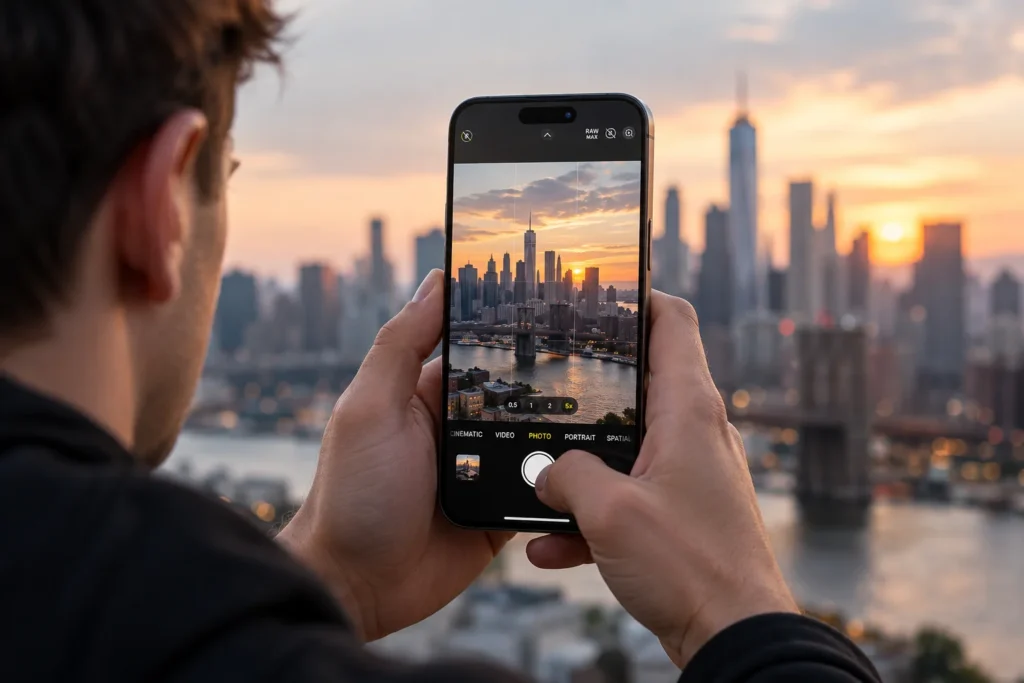
Photography is arguably where the iPhone 18 Pro vs iPhone 17 Pro comparison becomes more compelling.
The iPhone 17 Pro already offers an advanced system with three 48MP Fusion cameras and an 8x optical-quality zoom, so Apple wasn’t starting from a weak foundation.
The iPhone 18 Pro, however, introduces variable aperture on its 48MP Fusion Main camera. Instead of relying on a single fixed aperture, the camera can adjust how much light reaches the sensor, giving users greater control over depth of field and different shooting conditions. Apple has also added new Pro camera controls and further improvements aimed at photographers and video creators.
For casual users who mostly take quick photos for social media, this may not completely change the experience. For photographers, creators and anyone who regularly uses the iPhone as a serious camera, it is a much more meaningful addition.
And that’s important, because smartphone cameras have reached a point where adding more megapixels alone isn’t enough. Greater control over optics and image capture can make a bigger difference than another impressive number on a specification sheet.
Battery, AI and Everyday Improvements
Battery life is another major focus of the new generation. Apple says the iPhone 18 Pro lineup delivers significant improvements in efficiency, while the iPhone 18 Pro Max receives the largest battery-life increase Apple has introduced on an iPhone Pro Max.
Artificial intelligence is becoming equally important. The iPhone 18 Pro ships with iOS 27, the latest generation of Apple Intelligence and Siri AI, with the A20 Pro providing the processing power behind many of these features.
This doesn’t automatically make the iPhone 17 Pro obsolete. Last year’s A19 Pro was already designed to handle Apple Intelligence and demanding machine-learning workloads.
Instead, the advantage of the newer hardware is likely to become more noticeable over time as Apple introduces increasingly sophisticated on-device AI features.
Is It Actually Worth Upgrading?
If you already own an iPhone 17 Pro, upgrading isn’t an obvious decision.
The iPhone 18 Pro is undoubtedly the more advanced device, but the iPhone 17 Pro still offers excellent performance, three 48MP cameras, strong battery life, ProMotion and plenty of power for Apple Intelligence.
For someone who mainly uses an iPhone for browsing, messaging, streaming, social media and everyday photography, the difference may simply not be large enough to justify buying another flagship phone after only one year.
The situation changes for more demanding users. Photographers may find the variable-aperture camera particularly appealing, while creators, gamers and professionals can benefit more from the A20 Pro, improved thermal management and stronger sustained performance.
The upgrade also makes considerably more sense if you’re coming from an older device. Someone moving from an iPhone 14, 15 or an earlier generation will experience several years of accumulated improvements at once, making the difference much easier to appreciate.
iPhone 18 Pro vs iPhone 17 Pro: Final Thoughts
The iPhone 18 Pro vs iPhone 17 Pro comparison shows how Apple’s annual upgrades are becoming increasingly refined rather than revolutionary.
The iPhone 18 Pro brings the A20 Pro chip, a smaller Dynamic Island, a new variable-aperture camera, improved battery efficiency and a stronger foundation for Apple Intelligence and Siri AI. These are real improvements, especially for photography and demanding workloads.
But that doesn’t mean every iPhone 17 Pro owner needs to upgrade.
If your current phone still does everything you need, keeping it for another year is unlikely to leave you feeling far behind. If you regularly shoot photos and videos, play demanding games or use your phone as a professional creative tool, the iPhone 18 Pro becomes much easier to appreciate.
Ultimately, the most useful question isn’t whether the iPhone 18 Pro is better. It is.
The real question is whether its improvements will make a noticeable difference in the way you use your phone every day.