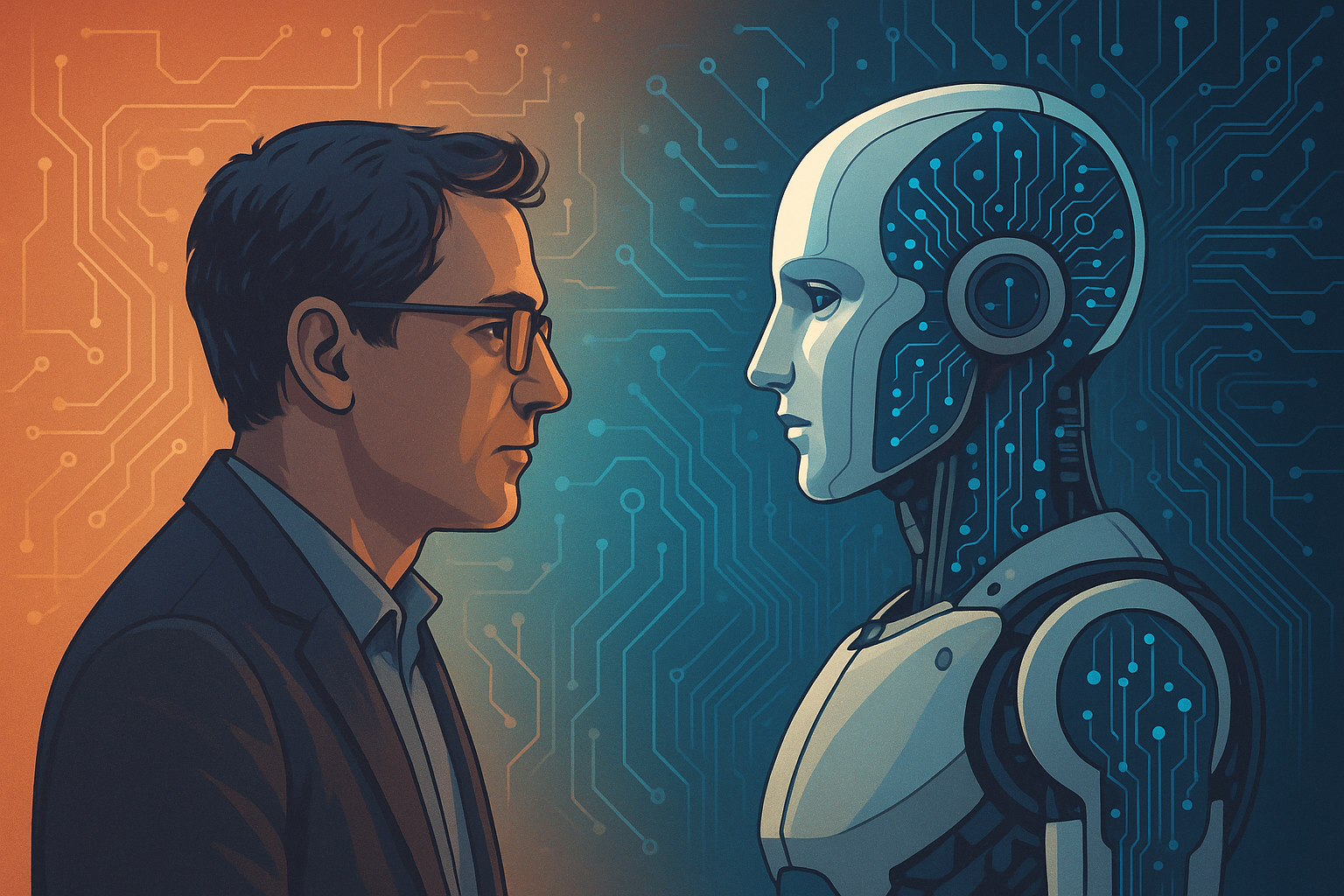
Humanoid robots have been part of our collective imagination for decades. Movies, TV shows, and tech demos have made it seem like factories full of human-shaped robots were just around the corner. But what’s the real situation today?
The truth is more interesting — and more grounded — than the hype.
From Sci-Fi to Factory Floors (Slowly)
In 2025, humanoid robots are no longer just research projects, but they’re also not common sights in factories yet. Most industrial environments still rely on traditional robots: fast, precise machines designed to do one task extremely well.
Humanoid robots, on the other hand, are being introduced carefully and experimentally. Companies are testing them in controlled settings to understand where they actually make sense.
Why the interest? Because humanoid robots are built to move, see, and interact like humans — which means they can work in spaces originally designed for people, without completely redesigning the factory.
What Are Companies Using Humanoid Robots For?
Right now, humanoid robots are mostly used as assistants rather than full workers.
One of the most promising areas is internal logistics. Moving boxes, carrying components, and transporting tools between workstations may not sound glamorous, but these tasks take time and physical effort. Humanoid robots can handle this kind of work while navigating stairs, narrow corridors, and mixed human-robot environments.
Another common use case is supporting repetitive or low-risk tasks. Instead of replacing specialized robotic arms, humanoid robots help with simple handling operations, basic assembly assistance, or object sorting. They’re slower than dedicated machines, but much more flexible.
There’s also growing interest in human-robot collaboration. In factories facing labor shortages or aging workforces, humanoid robots can work alongside people, reducing physical strain and taking over the most exhausting or monotonous tasks.
In some industries, humanoid robots are being tested for inspection and monitoring, especially in environments that are uncomfortable or unsafe for humans. Their human-like form allows them to use existing tools and access spaces designed for people.
Why Aren’t Humanoid Robots Everywhere Yet?
If humanoid robots sound so useful, why aren’t they already widespread?
The main reason is simple: they’re still expensive and technically complex. A humanoid robot costs far more than a traditional industrial robot, and it doesn’t yet match the speed, precision, or reliability of machines built for a single task.
There are also real technical challenges. Maintaining balance, handling objects with human-level dexterity, and working all day on battery power are problems that engineers are still actively solving. In industrial environments, reliability is everything — and humanoid robots are still improving on that front.
For now, many companies prefer proven automation solutions that offer immediate returns on investment.
Humanoid Robots vs Traditional Industrial Robots
Instead of thinking in terms of competition, it’s better to see humanoid robots as a complement to existing automation.
Traditional robots are unbeatable when it comes to repetitive, high-speed tasks. Humanoid robots, however, shine in situations where flexibility matters — especially in environments designed for humans.
That’s why their first real success is likely to come in mixed environments, not fully automated production lines.
What’s Next for Humanoid Robots in Industry?
Looking ahead, most experts agree on one thing: adoption will be gradual.
Over the next few years, we’ll likely see humanoid robots become more common in logistics, warehouse operations, and support roles inside factories. Improvements in artificial intelligence, perception, and energy efficiency will make them more autonomous and reliable.
Costs are also expected to drop as production scales up, making humanoid robots more accessible to mid-sized companies — not just tech giants.
Rather than replacing human workers, humanoid robots are expected to fill gaps, handle physically demanding tasks, and help factories adapt to changing labor markets.
Final Thoughts
Humanoid robots in industry are finally moving beyond demos and headlines. They’re not here to take over factories overnight, but they are starting to prove their value in real, practical ways.
For now, they act as flexible helpers — and in the coming years, they may become an important piece of the modern industrial ecosystem.
The future of manufacturing won’t be purely human or purely robotic. It will be collaborative — and humanoid robots are slowly earning their place in it.