Your smartphone battery is one of those things you probably think about often, especially when you see the percentage dropping too quickly. Over the years, however, many myths have grown around charging: “never charge it overnight”, “you must let it drain to 0%”, “fast charging always damages the battery”, or “you should always charge it to 100%”.
The truth, as often happens, is a little more balanced. Modern smartphone batteries are usually lithium-ion batteries. They are efficient and safe, but they are not immortal. Over time, they naturally wear out, although some good habits can help slow down this process.
The 20-80% Rule: Useful, but Not Mandatory
One of the most common tips is to keep your battery between 20% and 80%. In general, this is a sensible habit: avoiding frequent full discharges to 0% and not keeping the phone constantly at 100% can reduce battery stress.
However, this does not mean that charging your phone to 100% from time to time is a disaster. If you are going out for the whole day, travelling, or know you will not have access to a charger, fully charging your phone is perfectly normal.
The 20-80% rule should be seen as a good daily habit, not as a strict rule to follow with anxiety.
Many smartphones already include features designed to protect the battery. For example, some devices can slow down charging after 80% or complete the charge shortly before you usually unplug the phone. This helps reduce the time the battery spends fully charged.
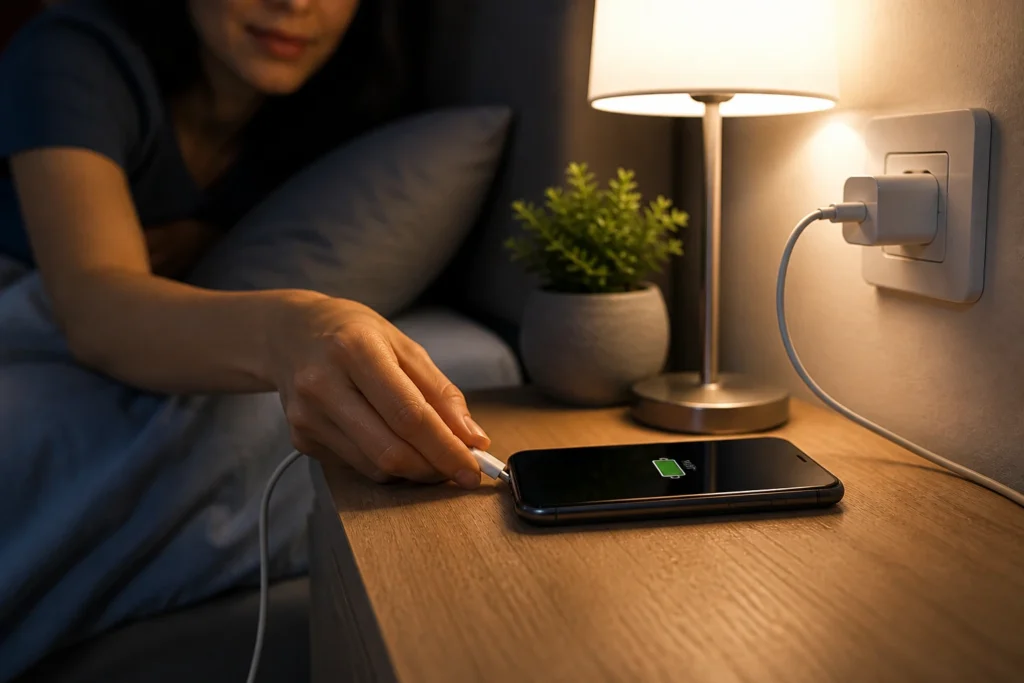
Overnight Charging: Does It Really Damage the Battery?
Overnight charging is one of the most debated topics. Many people believe that leaving a smartphone plugged in all night “overcharges” the battery. In reality, modern smartphones manage charging automatically when they reach 100%, so they do not keep charging uncontrollably.
The real issue is not so much overcharging, but the amount of time the battery spends at 100% and the heat generated during charging. A battery that remains fully charged for many hours may experience more stress over time, especially if the phone gets warm.
So, charging your phone overnight is not forbidden. If you do it, it is better to enable battery protection or optimized charging features, if your phone has them. It is also important to use reliable chargers and avoid placing the phone under a pillow, on blankets, or in places where heat can build up.
Heat Is the Battery’s Real Enemy
If there is one thing smartphone batteries really dislike, it is heat. Using the phone while it is charging, leaving it in the sun, keeping it inside a hot car, or covering it during charging can all speed up battery wear.
Heat can affect battery health more than many people realize. If your smartphone becomes very hot while charging, it is a good idea to unplug it for a few minutes, remove the case if necessary, and let it cool down.
This is especially important during the summer, when using the phone as a GPS in the car, or while gaming with the phone connected to the charger.
Does Fast Charging Ruin the Battery?
Fast charging is extremely convenient. In just a few minutes, it can give your phone several hours of battery life, and it is one of the most appreciated features on modern smartphones. But does it damage the battery?
The most accurate answer is: it depends on how it is managed.
Fast charging can generate more heat than slower charging, and heat is one of the main factors that affects battery aging. However, modern smartphones are designed to control temperature, power, and charging speed. In many cases, they charge faster during the first part of the process and then slow down as the battery gets closer to 100%.
The practical advice is simple: use fast charging when you need it, but you do not necessarily have to use it every time. At night, or when you are not in a hurry, slower charging can be a gentler option for the battery.
Should You Let Your Phone Drain to 0%?
No, you do not need to. This myth comes from older types of batteries, which worked differently from today’s smartphone batteries.
With modern phones, frequently letting the battery drain completely to 0% is not a good habit. It is usually better to do small top-ups during the day whenever possible, instead of always waiting for the phone to shut down.
Of course, if it happens occasionally, there is no need to worry. The problem is when it becomes a regular habit.
What About Charging to 100%?
Again, there is no need to panic. Charging to 100% is not “poison” for your battery. It becomes less ideal when the phone stays fully charged for many hours, especially in a warm environment.
For everyday use, stopping around 80-90% can help in the long term, but battery care should not become an obsession.
Smartphone batteries are components that naturally wear out over time. Even if you treat them well, they will not stay perfect forever. Good habits can help slow down the aging process, but they cannot stop it completely.
Good Habits That Really Help
To take care of your smartphone battery without making life complicated, you only need a few practical habits:
- avoid excessive heat;
- do not let the phone often drop to 0%;
- use optimized charging if available;
- use reliable chargers and cables;
- remove the case if the phone gets too hot while charging;
- use fast charging when you need it, not necessarily all the time;
- do not worry if you sometimes charge the phone to 100%.
Conclusion
Your smartphone battery does not need to be treated with fear, but it does deserve a little attention. The 20-80% rule can be useful, overnight charging is not a disaster if managed properly, heat is the real enemy, and fast charging should not be demonized.
The key is balance: use your smartphone normally, take advantage of the smart features already built into it, and follow a few simple habits to help the battery last longer.
You do not need to live obsessed with the battery percentage. You just need to understand what really helps your battery — and what is simply an old myth.