ChatGPT is no longer just a private AI assistant. With the global rollout of group chats, OpenAI is transforming ChatGPT into a social and collaborative platform where up to 20 people can plan, discuss, and create together.
OpenAI has announced the global rollout of group chats for all users across the Free, Go, Plus, and Pro plans, just a week after initial testing in Japan and New Zealand. Yes, ChatGPT is starting to look more and more like a social platform.
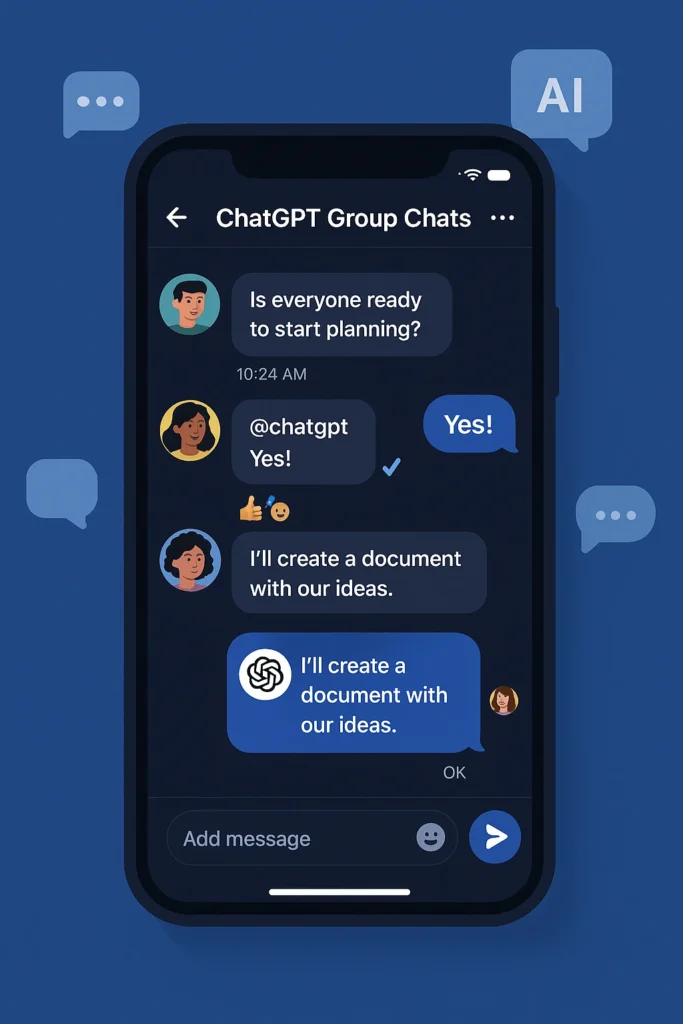
How ChatGPT Group Chats Work
Group chats allow up to 20 people to collaborate within the same shared conversation, with ChatGPT jumping in when tagged. OpenAI envisions this feature as a way to organize trips, write documents together, settle debates, or work on collaborative research with the AI assisting by searching, summarizing, and comparing information.
To start a group chat, users tap the “people” icon and add participants manually or via an invite link. Everyone joining must set up a short profile with a name, username, and profile picture.
Up to 20 participants can join as long as they accept the invitation. Personal settings and memory remain private to each individual, according to OpenAI. Adding someone to an existing chat creates a new conversation, leaving the original unchanged meaning you can’t pull someone into a discussion that already took place without starting fresh.
OpenAI also says ChatGPT can tell when to speak and when to stay silent. Users can tag the AI to trigger a response. It can also react to messages with emoji and reference users’ profile photos. Chat content is shared with all participants and with the AI, of course but private settings remain protected.
From Chatbot to Social Platform
OpenAI makes it clear that group chats are only the beginning of ChatGPT’s shift into a collaborative environment, moving beyond the traditional one-person chatbot experience. In other words, ChatGPT aims to become something like a hybrid of Slack, WhatsApp, and other messaging platforms but with built-in AI participating actively in conversations.
This announcement comes less than two weeks after the debut of GPT-5.1, which introduced both Instant and Thinking modes. And in September, OpenAI launched Sora, a social app where users can generate videos of themselves and their friends to share in a TikTok-style feed. It’s evident that OpenAI no longer wants to be just the company behind a smart chatbot; it aims to build a social ecosystem where AI is woven into every aspect of human communication.
Group chats are part of that vision. Now ChatGPT is meant to sit inside your conversations with friends, family, and teammates.
And while the feature could genuinely help with work collaborations or group projects, transforming ChatGPT into a social network also feels like a strategic business move one designed to boost engagement and make users increasingly dependent on the platform, more than a direct response to an actual market need.