Lithium batteries have quietly become one of the most important technologies in our daily lives. They power our smartphones, laptops, wireless headphones, cameras, power tools, electric bikes, scooters, and electric vehicles.
Their compact size and ability to store large amounts of energy make them extremely useful. However, those same characteristics can also create risks when a battery is damaged, defective, incorrectly charged, or exposed to excessive heat.
Understanding lithium battery dangers does not mean becoming afraid of every electronic device in your home. Most lithium-ion batteries work safely when they are properly manufactured, used with compatible equipment, and handled according to the manufacturer’s instructions.
The goal is simply to recognize the risks, identify the warning signs, and develop safer everyday habits.
Why Are Lithium Batteries So Widely Used?
Lithium-ion batteries have several important advantages over older battery technologies. They are relatively lightweight, rechargeable, compact, and capable of storing significant amounts of energy.
This makes them ideal for portable devices and products that need to operate for several hours without being connected to an electrical outlet.
A modern smartphone, for example, would be much heavier and less practical without lithium-ion technology. The same applies to laptops, cordless power tools, electric bicycles, and many other devices that have become part of everyday life.
However, placing a large amount of energy inside a relatively small battery requires effective safety systems. High-energy batteries need appropriate protection, careful manufacturing, compatible chargers, and responsible handling to minimize overheating and fire hazards.
What Causes Lithium Battery Dangers?
A lithium-ion battery contains several internal components that must remain stable and properly separated.
When the battery is working normally, built-in protection systems control charging, discharging, voltage, current, and temperature. Problems may occur when those systems fail or when the internal structure of the battery becomes damaged.
Possible causes include:
- Physical impacts or punctures
- Excessive heat
- Manufacturing defects
- Incompatible chargers
- Internal short circuits
- Improper repairs or modifications
- Battery deterioration caused by age
- Repeated exposure to stressful charging conditions
In some situations, these problems can trigger a process known as thermal runaway.
What Is Thermal Runaway?
Thermal runaway is an uncontrolled chain reaction in which a battery generates heat faster than it can release it.
As the internal temperature rises, additional chemical reactions may begin. Those reactions produce even more heat, which can cause the battery to release flammable gases, smoke, catch fire, or explode.
Lithium-ion batteries contain volatile electrolytes, and physical damage or high temperatures can cause them to vent flammable gases. A damaged battery can also reignite after the visible flames have disappeared, making these incidents particularly challenging for emergency responders.
Thermal runaway does not happen during the normal operation of a healthy battery. It is usually associated with damage, overheating, defects, overcharging, or failures within the battery or its protection systems.
The Most Common Causes of Lithium Battery Failure
Physical Damage
Dropping, crushing, bending, or puncturing a lithium battery can damage its internal layers.
The battery may appear normal from the outside even when the internal structure has been compromised. This hidden damage can create a short circuit and increase the possibility of overheating later.
Devices such as smartphones, laptops, electric scooters, power tools, and e-bikes should be checked carefully after a serious fall, collision, or impact.
A damaged battery should not be charged until it has been inspected by a qualified technician.
Excessive Heat
Heat is one of the most important factors associated with lithium battery dangers.
Leaving a smartphone, laptop, power bank, or other battery-powered device inside a hot car can place unnecessary stress on its internal components. Direct sunlight, radiators, heaters, and poorly ventilated spaces can also cause temperatures to rise.
Long periods of exposure to extreme temperatures may damage lithium-ion batteries and increase the possibility of failure.
Devices should always be stored and charged in a cool, dry, and well-ventilated environment.
Incompatible or Low-Quality Chargers
A charger is not simply a cable that delivers electricity. It is part of the device’s charging and safety system.
Poorly manufactured, counterfeit, damaged, or incompatible chargers may provide incorrect voltage or current. They may also lack important protections against overheating, short circuits, and electrical faults.
Whenever possible, use the original charger supplied with the device or a certified replacement specifically designed for that model.
The U.S. Fire Administration recommends using the charger provided by the manufacturer and avoiding overloaded outlets, damaged electrical equipment, and unsuitable charging arrangements.
Manufacturing Defects
Even a carefully handled battery can occasionally fail because of a manufacturing defect.
Microscopic contamination, damaged separators, poor-quality cells, or assembly problems may create conditions that lead to an internal short circuit.
These cases are relatively uncommon, but they explain why battery-related product recalls should always be taken seriously.
Before purchasing an electronic device, especially an electric mobility product, it may be useful to check whether the manufacturer or consumer safety authorities have announced any recalls.
Aging and Battery Deterioration
Lithium batteries do not last forever.
Every charging and discharging cycle causes a small amount of chemical and physical deterioration. Over time, a battery may lose capacity, become less stable, or generate more heat during normal use.
A battery that drains more quickly than usual is not necessarily dangerous. However, rapid deterioration combined with swelling, overheating, strange smells, or unusual noises should not be ignored.
Lithium Battery Warning Signs
A failing battery may provide warning signs before a serious incident occurs.
Pay attention to:
- Swelling or changes in shape
- Excessive heat during normal use
- Unusual heat while charging
- Hissing, popping, or cracking sounds
- A chemical or unusually sweet smell
- Smoke or visible vapor
- Discoloration around the battery
- Leaking material
- A screen or device casing separating
- Sudden and unexplained performance problems
Mechanical damage, bulging, rising temperature, popping sounds, hissing, and visible gases are all potential indicators of battery damage or thermal runaway.
Stop using the device when these warning signs appear. Continuing to charge a damaged battery may make the situation worse.
Why Is a Swollen Lithium Battery Dangerous?
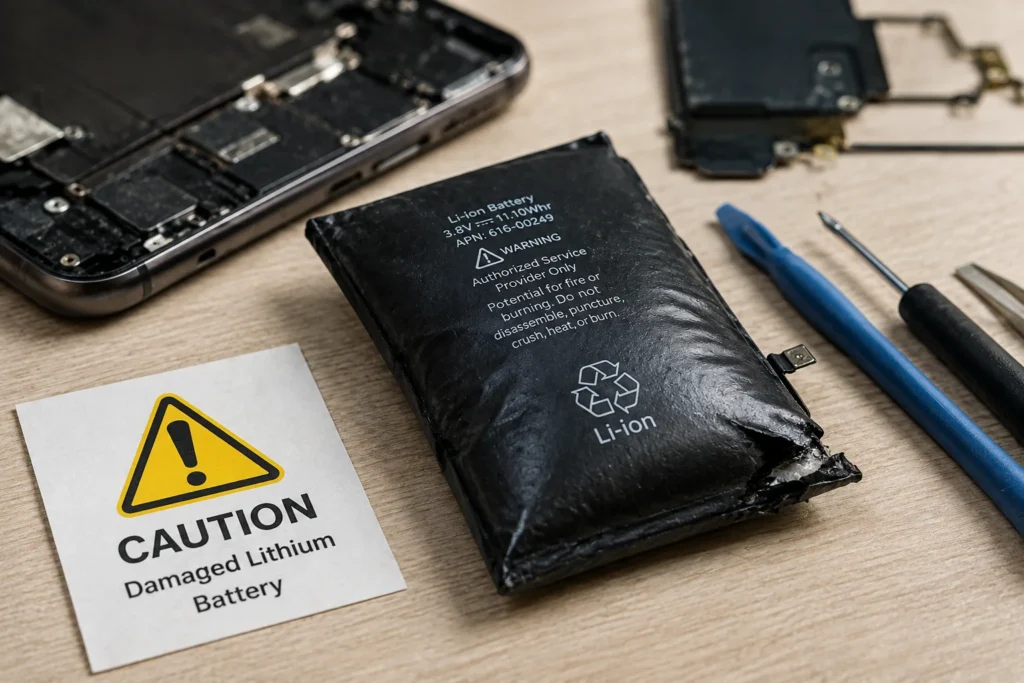
A swollen battery is one of the clearest signs that something is wrong.
Swelling usually occurs when gases accumulate inside the battery cell because of chemical deterioration, age, heat exposure, overcharging, manufacturing problems, or internal damage.
In a smartphone, a swollen battery may push the display away from the frame. In a laptop, it may lift the keyboard, trackpad, or lower casing.
Even when the device continues to work, the battery should not be considered safe.
Do not:
- Press the battery back into place
- Puncture or cut it
- Bend it
- Continue charging it
- Attempt an improvised repair
- Place it in household trash
A swollen battery represents potential fire damage and should be handled according to guidance from the manufacturer, retailer, repair facility, or local hazardous-waste service.
How to Charge Lithium Batteries Safely
Safe charging habits can significantly reduce lithium battery dangers.
Charge devices on a hard, stable, and well-ventilated surface. A desk, table, or countertop is usually more appropriate than a bed, sofa, carpet, or pillow.
Soft surfaces can trap heat and make it more difficult for the device to cool properly.
Avoid covering a charging device with:
- Blankets
- Clothing
- Cushions
- Books
- Papers
- Bags
You should also keep charging devices away from curtains, upholstered furniture, and other easily flammable materials.
Inspect cables and chargers regularly. Replace them when you notice exposed wires, damaged insulation, loose connectors, burn marks, or unusual heat.
When a device becomes extremely hot while charging, disconnect it only when it is safe to do so. Stop using it until the cause has been identified.
Should You Charge Devices Overnight?
Many modern smartphones and laptops contain battery-management systems designed to control charging and prevent normal overcharging.
However, no electronic system can completely eliminate the risks created by damaged batteries, defective chargers, blocked ventilation, or low-quality accessories.
For this reason, it is sensible to charge devices in an open, ventilated location rather than under bedding or close to combustible materials.
Large batteries, such as those used in e-bikes and electric scooters, require even greater caution. They should not be charged in hallways, staircases, or near doors where a fire could block an escape route.
E-Bikes and Electric Scooters
Electric bikes and scooters use battery packs that are much larger than those found in phones or wireless headphones.
A larger battery stores more energy. If it fails, the resulting fire may spread rapidly, release smoke and gases, and be difficult to control.
Only use batteries and chargers approved for the specific vehicle. Avoid unofficial battery modifications, incompatible chargers, rebuilt packs of uncertain quality, and repairs performed by unqualified individuals.
Battery systems for personal electric mobility devices are covered by specific safety standards because failures can involve overheating, fire, electrical hazards, and thermal burns.
After a collision or serious fall, the battery should be inspected before the vehicle is charged again.
What to Do If a Battery Starts Smoking
A smoking, hissing, or burning battery can become dangerous very quickly.
Do not pick it up with your bare hands, open the device, breathe the fumes, or attempt to carry a burning battery through the building.
Move away from the area, alert other people, and contact emergency services.
Lithium-ion battery incidents may involve flammable gases, chemical exposure, explosions, intense heat, and the possibility of reignition after the visible fire has been extinguished.
Personal safety should always come first. Trying to handle an unstable battery without proper equipment or training can place you in greater danger.
Safe Lithium Battery Storage
Storage is another important part of lithium-ion battery safety.
Keep spare batteries and battery-powered devices in a cool, dry place away from direct sunlight, heaters, and other heat sources.
Do not store loose batteries in pockets, bags, toolboxes, or drawers alongside metal objects such as:
- Coins
- Keys
- Screws
- Jewelry
- Tools
Metal objects can connect the battery terminals and create a short circuit.
When storing or transporting removable batteries, protect the terminals with non-conductive tape, suitable covers, the original packaging, or an individual plastic bag.
Check stored batteries periodically for swelling, leakage, corrosion, deformation, or heat.
Never Put Lithium Batteries in Household Trash
Lithium-ion batteries should not be placed in ordinary household garbage or standard recycling bins.
Waste collection vehicles and recycling equipment can crush, puncture, or damage batteries. Even a battery that appears empty may retain enough energy to start a fire.
The U.S. Environmental Protection Agency recommends taking lithium-ion batteries to dedicated recycling facilities, retailer collection programs, or household hazardous-waste collection points. Battery terminals should be covered with non-conductive tape, or each battery should be placed in a separate plastic bag before transport.
Local disposal rules may vary, so always check the instructions provided by your municipality or authorized recycling service.
Are Lithium Batteries Safe Overall?
Despite the risks discussed in this article, lithium-ion batteries are not inherently unsafe products that should be avoided.
Billions of battery-powered devices are used every day without serious problems. Well-designed batteries contain several layers of protection intended to control temperature, voltage, current, charging, and discharging.
Most incidents are connected to defective products, physical damage, excessive heat, incompatible accessories, unauthorized modifications, poor-quality replacement batteries, or incorrect disposal.
Awareness is therefore more useful than fear.
Knowing the warning signs and following the manufacturer’s instructions can greatly reduce unnecessary risks.
Final Thoughts on Lithium Battery Dangers
Lithium batteries have transformed the way we communicate, work, travel, and use technology.
Their ability to store significant energy in a compact space is what makes them so practical. It is also why damaged or defective batteries need to be treated seriously.
The most effective precautions are simple:
Use reliable chargers, keep devices away from excessive heat, avoid charging on soft surfaces, stop using swollen or damaged batteries, and recycle them through authorized collection services.
Understanding lithium battery dangers is not about creating alarm. It is about making informed decisions and protecting yourself, your home, and the people around you.
With responsible use and a little attention, lithium-powered devices can remain a safe and valuable part of everyday life.