Artificial intelligence is one of the biggest technology stories of the decade, but it has also become one of the most effective hooks for cybercrime. Attackers are using the popularity of AI tools to make scams look more modern, more useful, and more believable. In practice, that means fake AI apps, AI-themed browser extensions, deepfake messages, polished phishing emails, and fraudulent websites designed to steal money, credentials, or sensitive data. The FBI has specifically warned that criminals are already using generative AI to support social engineering, spear phishing, fake websites, voice cloning, and fraudulent videos.
Why AI hype makes scams more effective
Every major tech trend creates a wave of opportunistic abuse, and AI is no exception. The difference is that AI gives criminals two advantages at once: a popular brand story to lure victims in, and tools that help them generate more convincing content at scale. Microsoft’s 2025 Digital Defense Report says AI is pushing threats to new levels of speed, scale, and sophistication, and it notes that AI-driven phishing is now three times more effective than traditional campaigns. That combination matters because the “AI” label lowers skepticism for some users while the generated content raises the quality of the scam itself.
People are more likely to click when they think they are downloading a productivity booster, trying a new AI assistant, or testing the latest browser add-on. That is exactly the behavioral gap attackers want to exploit. Instead of relying on badly written spam, they can now produce polished landing pages, cleaner copy, and more targeted outreach that feels closer to legitimate marketing than old-school phishing. The UK’s National Cyber Security Centre has also warned that criminal use of AI is highly likely to increase by 2027 as the technology becomes more widely adopted across society.
How criminals use AI to scale deception
The most obvious shift is in content quality. According to the FBI’s IC3, criminals use AI-generated text to make messages sound believable, translate scams more naturally, and create content for fraudulent websites. They also use AI-generated images for fake identities and forged-looking credentials, AI-generated audio for voice cloning, and AI-generated video to impersonate executives, authority figures, or real online contacts. In other words, AI helps attackers reduce the rough edges that used to expose scams so quickly.
Deepfakes are making this even more dangerous. An IC3 consumer infographic states that criminals are using AI-generated or AI-manipulated images, video, and audio to gain trust and scam victims, especially through impersonation. The FBI has also warned about malicious messaging campaigns that used AI-generated voice messages while pretending to come from senior US officials. Even when the end goal is not malware, these same tactics can be used to push victims toward malicious downloads, credential theft pages, or remote-access tools disguised as legitimate software.
From fake AI tools to actual malware infections
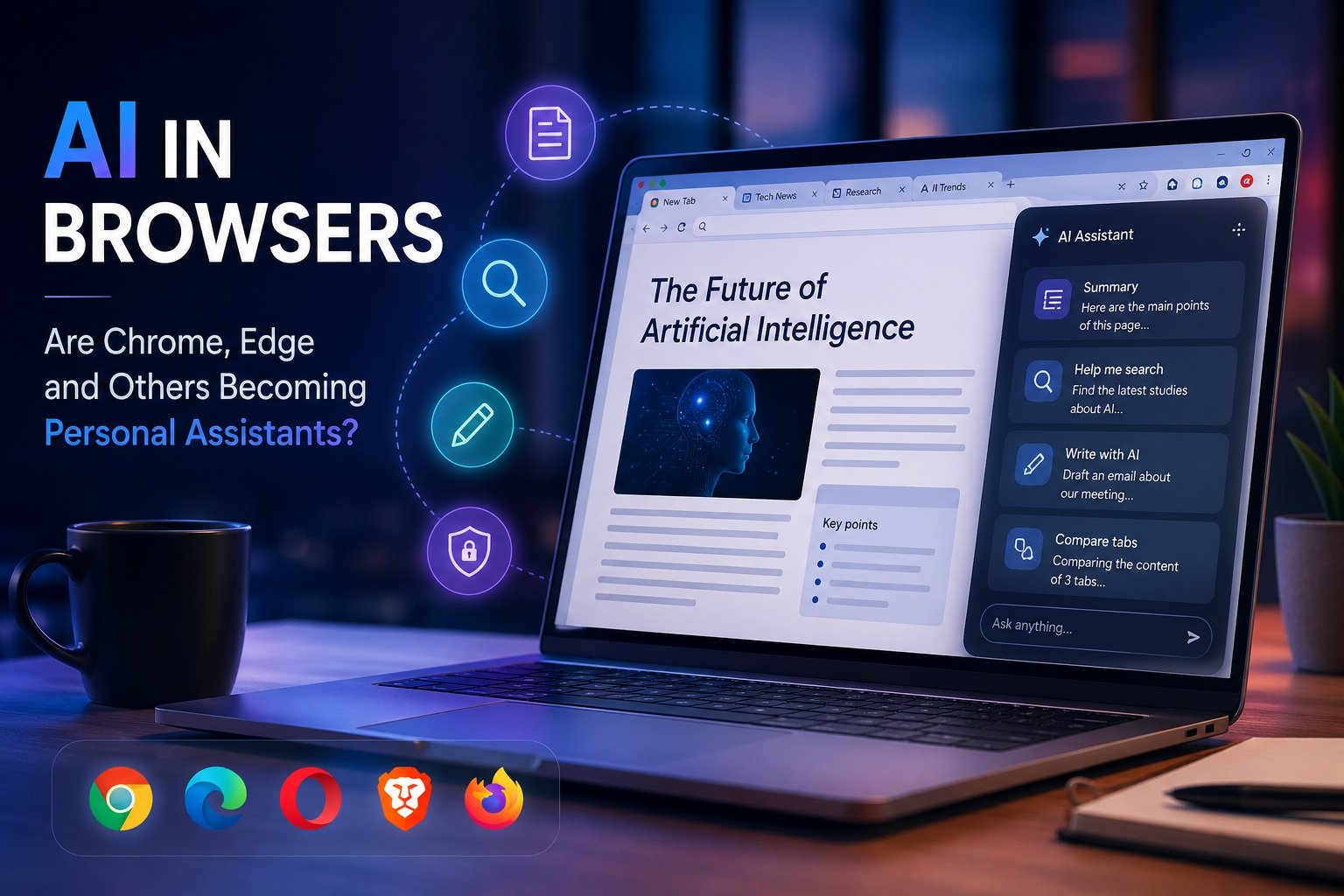
One of the biggest risks in 2026 is not just AI-generated phishing content, but fake AI products themselves. Attackers increasingly disguise malicious software as AI assistants, browser extensions, chat helpers, writing tools, or “productivity boosters.” A recent Microsoft Security research post described malicious AI assistant browser extensions that harvested chat histories and browsing data from platforms including ChatGPT and DeepSeek. Microsoft said reporting indicated these extensions reached around 900,000 installs, while its own telemetry confirmed activity across more than 20,000 enterprise tenants.
That example shows why the AI hype cycle is so attractive to attackers. Users often assume that an AI extension asking for broad permissions is normal, because many legitimate AI tools do require access to webpages, clipboard data, or browsing context to function. Microsoft found that these malicious extensions collected full URLs and AI chat content, then transmitted that data to attacker-controlled infrastructure. In practical terms, a tool that looks like a harmless AI sidebar can become a long-term data collection mechanism inside everyday browsing.
Why businesses should take this seriously
This is not only a consumer problem. Employees now paste strategy notes, code snippets, drafts, research, and customer-related information into AI tools as part of normal work. If a malicious extension, fake AI app, or phishing campaign sits between the user and the tool, the attacker may gain access to far more than a password. Microsoft warned that harvested AI chat content can expose proprietary code, internal workflows, strategic discussions, and other confidential information. The NCSC has likewise warned that threat actors are using AI to support reconnaissance, social engineering, vulnerability research, and even automated post-breach stages such as data exfiltration.
This matters because AI hype encourages faster adoption than normal. Companies want productivity gains, workers want convenience, and many teams experiment before governance catches up. That creates an opening for look-alike tools, weak extension policies, and “shadow AI” usage that security teams may not see until after data has already left the environment. OpenAI has also reported detecting and disrupting abusive activity involving scams, social engineering, and malicious cyber activity, underscoring that the threat is broad and active rather than hypothetical.
How users can reduce the risk
The good news is that basic security habits still matter. The problem is not AI itself, but blind trust in anything marketed as AI. A safer approach includes:
- installing AI tools only from trusted publishers and official websites
- reviewing browser extension permissions before approving them
- avoiding random “AI assistant” add-ons that promise too much
- verifying urgent voice or video messages through a second channel
- being suspicious of AI apps that ask for login credentials, wallet access, or remote permissions
- reviewing installed extensions regularly and removing anything unfamiliar
These recommendations align with guidance from Microsoft, the FTC, and law-enforcement sources warning users to be cautious around impersonation, suspicious messaging, and unverified tools.
Final thoughts
AI-powered malware scams are effective because they exploit both curiosity and trust. Cybercriminals do not need to build advanced AI models of their own to benefit from the trend. They only need to package old fraud tactics inside a modern AI wrapper and use generative tools to make everything look more credible. As AI adoption keeps growing, users and businesses should expect more fake assistants, more believable phishing, more deepfake-driven impersonation, and more malware disguised as innovation. The safest mindset in 2026 is simple: if a new AI tool looks exciting, verify it before you trust it.