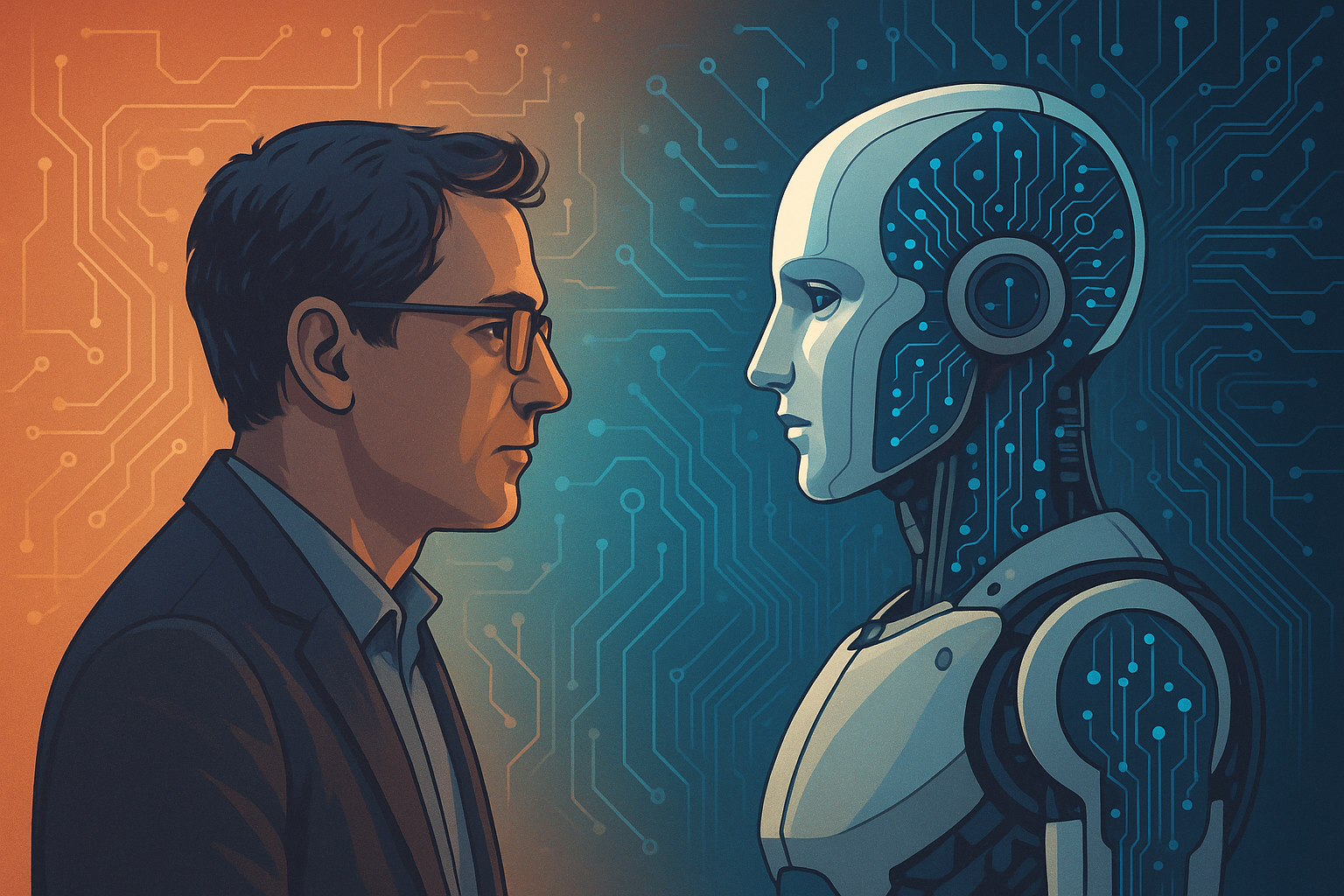
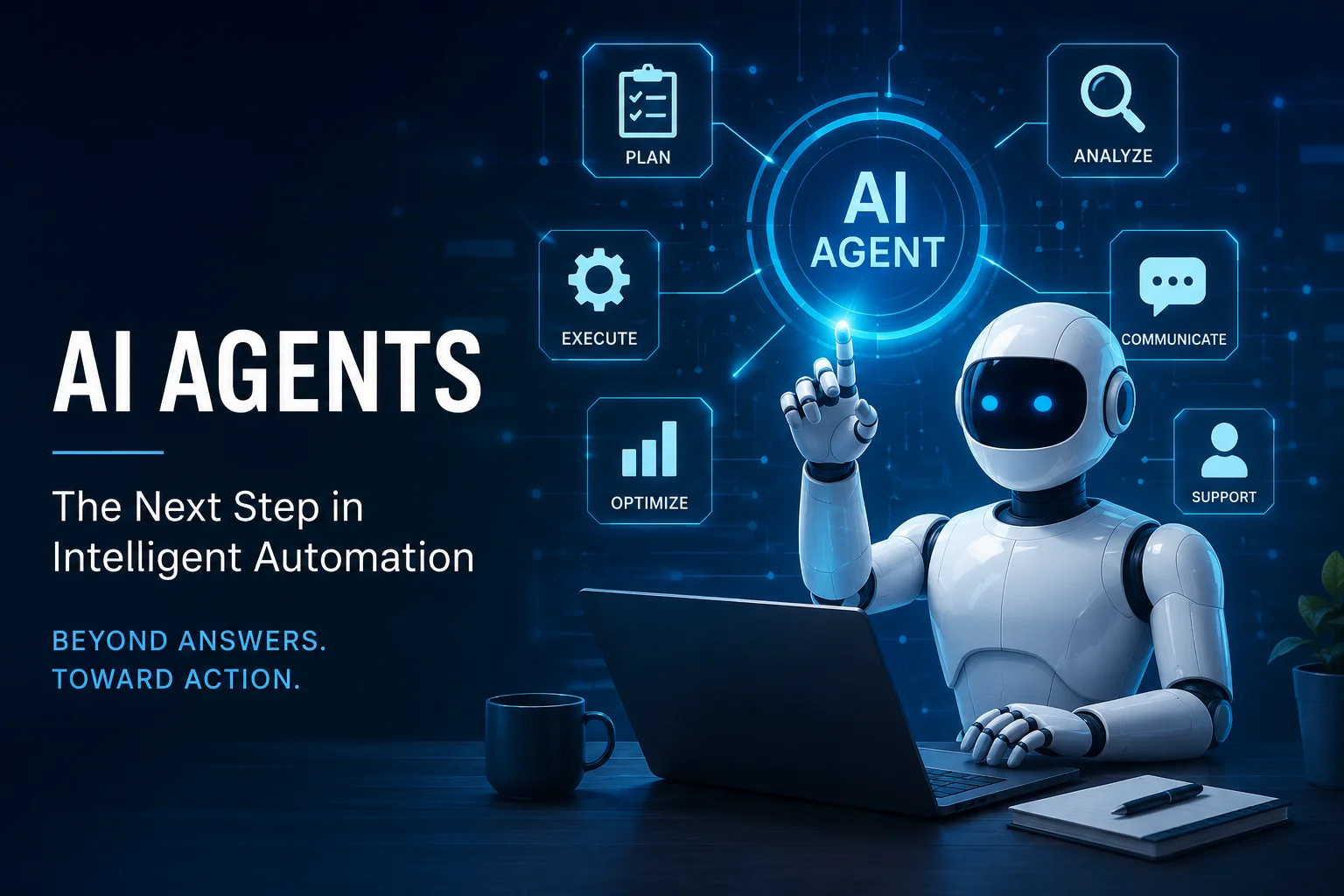
Artificial intelligence is no longer a distant topic reserved for tech companies, engineers, or science fiction. It is already entering offices, schools, creative studios, hospitals, customer service departments, marketing teams, and small businesses. For many people, this creates a mix of curiosity and concern: Will AI take my job? Will I need to become a programmer? Am I already behind?
The honest answer is more balanced than many headlines suggest. AI will change the way many jobs are done, but it does not mean everyone must suddenly become a machine learning expert. In fact, research from the OECD suggests that fewer than 1% of workers will need advanced AI-specific skills such as programming or model development. For most people, the real priority will be learning how to use digital tools, understand data, solve problems, and work well with both humans and intelligent systems.

AI Will Not Replace Every Worker, but It Will Change Many Tasks
One of the most important things to understand is that AI usually transforms tasks before it transforms entire jobs. A marketing professional may use AI to draft campaign ideas. A customer support agent may rely on AI to summarize conversations. A teacher may use AI to prepare learning materials. A designer may use AI to generate visual concepts. A business owner may use AI to analyze sales trends or write clearer emails.
This means the future of work will not simply be divided between “technical people” and “non-technical people”. Instead, the most valuable professionals will be those who understand how to combine their existing expertise with AI tools.
The World Economic Forum’s Future of Jobs Report 2025 explains that technological change, economic uncertainty, demographic shifts, and the green transition are among the forces expected to reshape the labor market by 2030. The report is based on the views of more than 1,000 global employers representing over 14 million workers.
So the question is not only, “Which jobs will disappear”? A better question is: “Which skills will help people remain useful, adaptable, and confident as work changes”?
1. AI Literacy: Knowing How to Work With AI
The first skill is AI literacy. This does not mean knowing how to build an AI model from scratch. It means understanding what AI can do, what it cannot do, and how to use it responsibly.
In practical terms, AI literacy includes knowing how to write effective prompts, review AI-generated content, check for mistakes, protect sensitive data, and choose the right tool for the right task. It also means understanding that AI is not always neutral or correct. It can produce inaccurate information, reflect bias, or misunderstand context.
This is why the best workers will not be those who blindly trust AI, but those who know how to guide it, question it, and improve its output.
For example, asking AI to “write a report” may produce something generic. Asking it to “summarize these sales results for a small business owner, using a clear and professional tone, and highlighting three practical actions” will usually lead to a much better result. The difference is not magic. It is skill.
2. Critical Thinking and Judgment
As AI becomes better at generating text, images, code, and analysis, human judgment becomes even more important. When everyone can produce content quickly, the real value shifts to knowing what is accurate, useful, ethical, and relevant.
Critical thinking helps people ask better questions. Is this information reliable? Does this conclusion make sense? What data is missing? Is there another interpretation? Could this recommendation create risks?
This skill will matter in almost every field. A journalist will need to verify AI-assisted research. A manager will need to evaluate AI-generated business insights. A student will need to distinguish between real understanding and simply copying an automated answer. A professional will need to know when AI saves time and when human experience is still essential.
AI can generate options, but people still need to make decisions.
3. Data Literacy: Understanding Numbers, Trends, and Context
AI works closely with data. That is why data literacy will become one of the most useful skills in the next few years. Again, this does not mean everyone must become a data scientist. It means being able to read, interpret, and question data in everyday work.
Data literacy includes understanding charts, percentages, trends, customer behavior, performance metrics, and basic cause-and-effect relationships. It also means knowing that data can be incomplete, misleading, or presented in a way that supports a specific narrative.
The OECD notes that AI is increasing the importance of digital skills and the ability to use, analyze, and interpret data. At the same time, human skills such as problem-solving, creativity, and innovation remain essential.
In the workplace, this could mean understanding why a website’s traffic is falling, why an ad campaign is not converting, why customers are leaving, or why a process is taking too long. AI can help identify patterns, but humans need to understand what those patterns mean.
4. Adaptability and Lifelong Learning
Perhaps the most important skill of all is adaptability. The tools we use today may look very different in five years. Some platforms will disappear, others will become standard, and new ways of working will emerge.
The World Economic Forum reports that employers expect 39% of key skills required in the job market to change by 2030. This does not mean people need to panic. It means learning can no longer be something we do only at school or at the beginning of a career.
The strongest professionals will be those who can learn, unlearn, and relearn without feeling defeated every time something changes.
This mindset is especially important because many people feel overwhelmed by AI. That reaction is completely understandable. But the goal is not to master everything at once. The goal is to build small, consistent learning habits: testing new tools, reading reliable sources, taking short courses, practicing with real tasks, and staying curious.
5. Communication Skills
The more technology enters the workplace, the more communication matters. This may sound surprising, but it makes sense. AI can produce information quickly, but humans still need to explain ideas, manage expectations, build trust, negotiate, listen, and collaborate.
Good communication includes writing clearly, speaking with purpose, adapting your message to different audiences, and giving useful feedback. It also includes active listening, which is often underestimated.
In a workplace where AI can generate reports, emails, and presentations, people who communicate with clarity and empathy will stand out. They will be able to turn complex information into something understandable and useful.
This is especially valuable for managers, consultants, teachers, healthcare workers, sales professionals, customer service teams, and anyone who works directly with people.
6. Creativity and Problem-Solving
AI can generate ideas, but creativity is not just about producing something new. It is about connecting ideas, understanding context, solving real problems, and creating value for people.
In the coming years, creativity will become more practical, not less important. Workers will need to imagine better workflows, new services, smarter customer experiences, and more efficient ways to use technology.
The World Economic Forum identifies AI and big data as the fastest-growing skills, followed by networks and cybersecurity and technology literacy. But it also highlights creative thinking, resilience, flexibility, curiosity, and lifelong learning as skills expected to grow in importance between 2025 and 2030.
This combination is important. The future will not belong only to those who understand technology. It will belong to those who can use technology creatively to solve meaningful problems.
7. Emotional Intelligence and Empathy
AI may become faster and more capable, but human relationships will remain central to work. Empathy, emotional intelligence, and the ability to understand people’s needs will continue to matter deeply.
This is true in leadership, healthcare, education, consulting, sales, human resources, and many other areas. People do not only want answers. They want to feel understood. They want trust, reassurance, and human connection.
Even when AI supports a service, the human experience around that service can make the difference. A company may use AI to automate support, but if customers feel ignored, the technology will not solve the real problem. A manager may use AI to analyze performance, but they still need empathy to guide a team through change.
In a more automated world, being genuinely human becomes a strength.
8. Ethical Awareness and Responsibility
As AI becomes part of daily work, ethical awareness will become a professional skill. Workers will need to understand privacy, copyright, transparency, bias, and the responsible use of automated systems.
For example, should confidential company data be entered into an AI tool? Can AI-generated images be used commercially? Is an automated decision fair? Should customers know when they are interacting with AI? Who is responsible if AI produces a harmful recommendation?
These questions are not only for lawyers or executives. They will increasingly affect everyday decisions across many professions.
A good worker in the AI era will not only ask, “Can we automate this”? but also, “Should we automate this, and how can we do it responsibly”?
The Real Goal: Becoming AI-Ready, Not AI-Perfect
The future of work can feel intimidating, especially for people who did not grow up with advanced digital tools or who already feel busy enough with their current responsibilities. But becoming ready for AI does not require perfection.
It starts with a practical attitude: learn the basics, experiment safely, stay curious, and focus on the skills that make you more valuable.
The most important professionals of the next few years will not necessarily be the ones who know every AI tool. They will be the ones who can think clearly, communicate well, adapt quickly, understand data, solve problems, and use technology with responsibility.
AI will change work, but it will not remove the need for human intelligence. In many ways, it will make human skills more visible. The challenge is not to compete with machines on speed. The opportunity is to use machines to amplify what people do best: understand, create, decide, connect, and care.
The future of work will belong to those who are willing to keep learning not out of fear, but with confidence.