There was a time when replacing a phone battery felt almost too easy.
You turned the phone around, removed the plastic back cover, popped out the old battery, inserted a new one, and that was it. No appointment, no technician, no heat gun, no special tools. Many people even carried a second battery in their bag, especially during long days away from home.
Today, that world feels very far away.
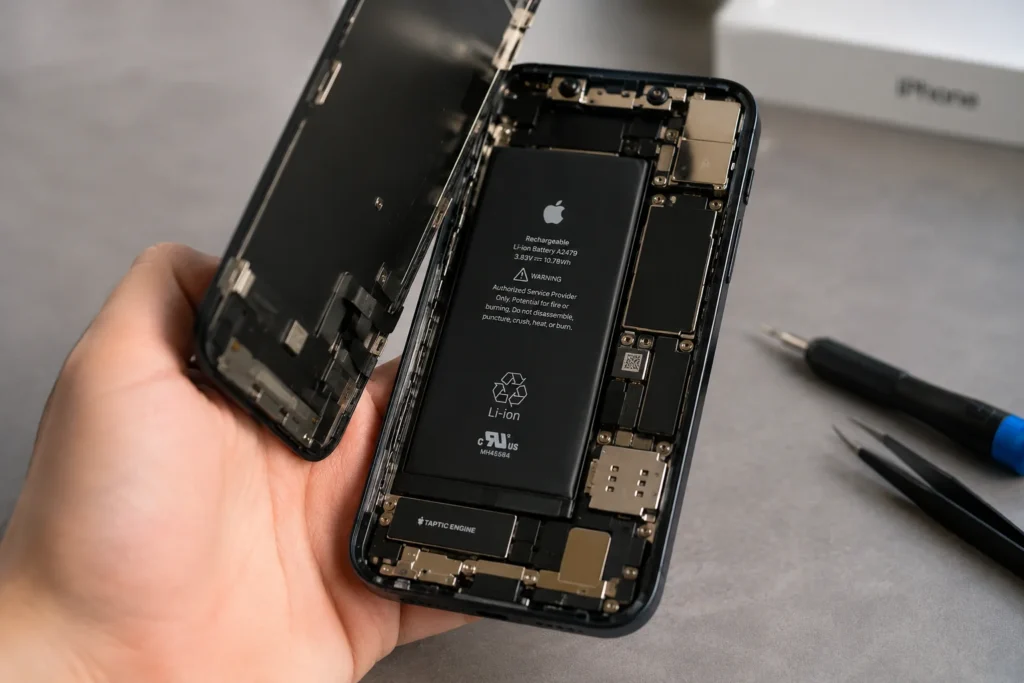
Most modern smartphones have sealed bodies, glass backs, glued-in batteries, and repair procedures that are anything but simple for the average user. So the question is natural: why did phones stop having removable batteries?
The answer is not just one thing. It is a mix of design choices, technical improvements, business interests, safety concerns, and changing user habits. Some reasons make sense. Others are more frustrating. And, as smartphone prices keep rising, the topic matters more than ever.
The Push Toward Thinner and More Premium Designs
One of the biggest reasons removable batteries disappeared is simple: smartphone design changed.
Older phones were often made of plastic, with a back cover that could be opened by hand. That design was practical, but it also had limits. Once manufacturers started competing on thinner bodies, larger screens, metal frames, and glass backs, removable batteries became harder to include without compromises.
A removable battery needs a few things: a removable cover, a battery compartment, protective casing around the battery, contact points, and enough internal space to make the swap safe and easy. All of that takes room.
Modern phones are packed incredibly tightly inside. Every millimeter matters. The battery, cameras, speakers, antennas, cooling systems, motherboard, wireless charging coil, vibration motor, and sensors all compete for the same limited space. By sealing the battery inside, manufacturers can use more of the internal volume and design the phone as one compact structure.
This helps create devices that feel thinner, stronger, and more refined. But it also means users lose easy access to one of the most important parts of the phone.
Better Water and Dust Resistance
Another major reason is water and dust protection.
Many modern smartphones are designed to survive splashes, rain, dust, and sometimes even temporary immersion in water. To achieve that, manufacturers rely on tight seals, adhesives, gaskets, and carefully controlled openings.
A removable back cover makes this more difficult. It is not impossible, but it adds complexity. Every removable part is a potential weak point. If the cover is not closed perfectly, or if the seal wears down over time, water and dust can get inside more easily.
For many users, water resistance is genuinely useful. A phone can accidentally fall near a sink, get caught in the rain, or survive a spilled drink. Manufacturers know this, and water resistance has become one of the features people expect in higher-end devices.
So, from a design perspective, sealed batteries make it easier to build phones that feel more durable against everyday accidents. The trade-off is clear: better protection from the outside, but less freedom to repair the inside.
Bigger Batteries in Less Space
It may sound strange, but non-removable batteries can sometimes help phones have larger batteries.
When the battery does not need to be easily removed by the user, it can be shaped and positioned more efficiently inside the device. Manufacturers can use custom battery shapes, adhesive mounting, and tighter layouts to fit more capacity into the same body size.
With removable batteries, the battery usually needs a more standardized shape and stronger external casing. It also needs to be easy to grip, remove, and reinsert. That makes the design more user-friendly, but not always space-efficient.
Modern smartphones are expected to do much more than old phones. They run bright OLED displays, powerful processors, multiple cameras, 5G modems, AI features, GPS, Bluetooth, Wi-Fi, and always-on background services. All of that needs energy.
So manufacturers try to squeeze as much battery capacity as possible into a thin body. A sealed design gives them more flexibility, even if it makes replacement more complicated later.
Safety and Battery Management
Lithium-ion batteries are powerful, but they also need to be handled carefully.
A damaged battery can swell, overheat, leak, or in rare cases catch fire. Modern phones include advanced battery management systems that control charging speed, temperature, voltage, and overall battery health.
By sealing the battery inside the device, manufacturers can reduce the chance of users inserting low-quality replacement batteries, damaging connectors, or using parts that do not meet safety standards.
This is one of the more reasonable arguments for non-removable batteries. Not every replacement battery sold online is safe or reliable. Some cheap third-party batteries may have poor quality control, inaccurate capacity claims, or weaker protection circuits.
However, this does not mean users should have no repair options. A better balance would be to make batteries easier to replace while still ensuring safe, certified replacement parts are available.
Wireless Charging and Premium Features
Modern phones also include features that were not common during the removable-battery era.
Wireless charging is one example. To support it, phones need internal charging coils usually placed behind the back panel. This design works better with sealed glass or composite backs. Adding a removable cover can make the structure more complicated.
The same applies to thin camera modules, stronger frames, haptic motors, and internal cooling systems. Modern phones are not just communication devices anymore; they are cameras, gaming devices, payment tools, work machines, navigation systems, and entertainment screens.
The more complex phones became, the more manufacturers moved toward sealed internal layouts. From their perspective, it makes the device easier to engineer as a complete package. From the user’s perspective, it often makes repairs more expensive and less convenient.
The Business Side: Repairs, Upgrades, and Control
There is also a less comfortable part of the story: sealed batteries give manufacturers more control.
When a battery is easy to replace, users can keep a phone longer. If the device still performs well, a simple battery swap can give it a second life. That is great for consumers and better for reducing electronic waste.
But it can also reduce the pressure to buy a new phone.
With sealed designs, many people do not replace the battery when performance drops. They simply buy a new device, especially if the repair seems expensive or inconvenient. In this sense, non-removable batteries can indirectly push people toward faster upgrade cycles.
This does not mean every manufacturer removed removable batteries only to sell more phones. The technical reasons are real. But it would be naive to ignore the business advantage of making repairs harder or more dependent on official service channels.
Are Non-Removable Batteries Always Bad?
Not necessarily.
Sealed phones have real advantages. They can be thinner, stronger, more water-resistant, and more elegant. They can include larger batteries, wireless charging, and more advanced internal designs. For many users, these benefits matter every day.
The problem is not simply that batteries are sealed. The real problem is when a battery becomes difficult, expensive, or unnecessarily restricted to replace.
A phone battery is a consumable part. No matter how good it is, it will age. After a few years, battery life usually gets worse. The phone may still be perfectly usable, but the battery becomes the weak point.
If replacing that battery is too complicated or too costly, many devices are retired earlier than they should be. That is bad for the user’s wallet and bad for the environment.
Could Removable Batteries Come Back?
In some form, yes.
The future may not look exactly like the old phones with plastic covers and batteries you could swap in seconds. But pressure for better repairability is growing. Consumers are more aware of electronic waste, and regulators are paying more attention to the right to repair.
In Europe, new rules are pushing manufacturers toward devices with batteries that are easier to remove and replace. This does not automatically mean every smartphone will return to the classic removable-battery design, but it does mean manufacturers will have to take repairability more seriously.
We may see phones where batteries are not removable in five seconds, but can still be replaced with normal tools, clear instructions, and available spare parts. That would already be a meaningful improvement compared with many current designs.
The ideal future is not necessarily a return to the past. It is a better balance: modern design, good water resistance, strong performance, and a battery that does not turn the entire phone into a disposable product.
What Users Can Do Today
Even if your current phone does not have a removable battery, there are still practical ways to extend its life.
Avoid exposing it to excessive heat, because heat is one of the biggest enemies of battery health. Try not to leave the phone under direct sunlight, inside a hot car, or charging under a pillow.
You do not need to obsess over battery percentages, but keeping the phone between roughly 20% and 80% when convenient can help reduce battery stress over time. Many modern phones also include optimized charging features that slow down charging overnight to protect battery health.
It is also worth checking the battery replacement cost before buying a new device. Sometimes replacing the battery is far cheaper than upgrading the whole phone. If the phone still receives updates and performs well, a new battery can make it feel surprisingly fresh again.
Finally, when buying a new phone, look beyond camera specs and screen brightness. Check repairability, software update support, spare part availability, and battery replacement options. These details may not look exciting on launch day, but they matter a lot after two or three years.
Conclusion: Convenience Was Lost, But It May Return in a New Way
Phones lost removable batteries because the industry moved toward thinner, sealed, more premium, and more feature-packed devices. Water resistance, larger batteries, wireless charging, internal space optimization, and safety all played a role.
But users also lost something important: control.
Being able to replace a battery easily gave people a sense of ownership. It made phones feel less disposable. It allowed a device to last longer without depending on expensive repairs or complicated service procedures.
The good news is that the conversation is changing. Repairability is becoming more important again, and future phones may offer a better compromise between modern design and user-friendly maintenance.
Removable batteries may not return exactly as we remember them. But easier battery replacement should. Because a phone should not become useless just because one aging component can no longer keep up.